
Press Item
The Better India
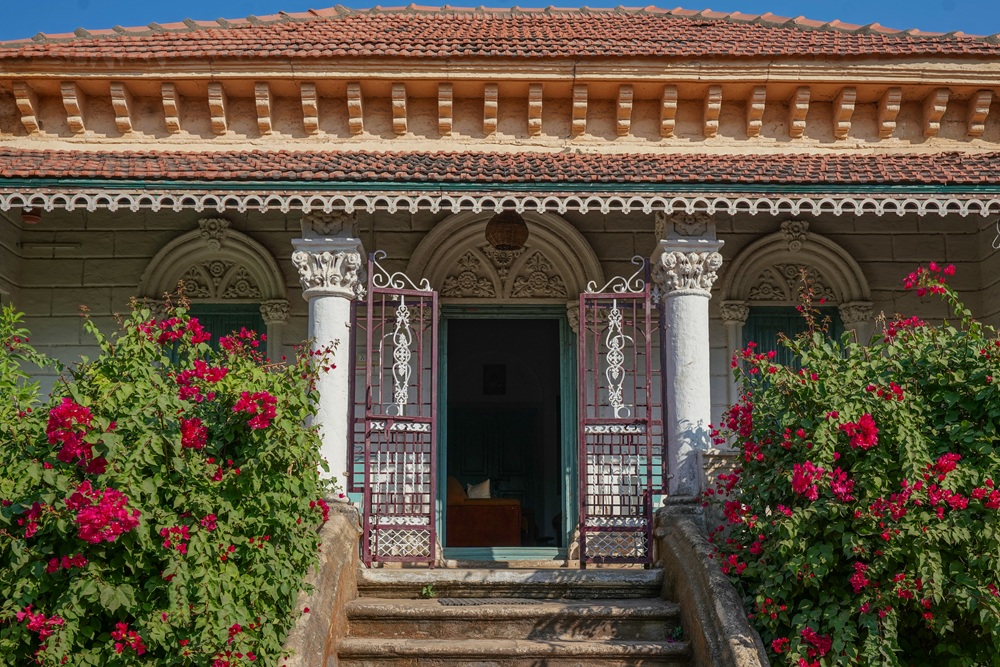
Devpur Darbargadh: A 120-Year-Old Heritage Fort Preserving Kutch’s Royal Legacy Through Hospitality & Education
The 120-year-old Darbargadh in Devpur village combines luxury heritage tourism with education, preserving royal Kutch architecture while nurturing future generations.
In the rugged landscape of Gujarat’s Kutch, just 30 kilometres from Bhuj, stands a 120-year-old fort with a remarkable story of reinvention. The historic Darbargadh in Devpur village, built in 1905, has transformed into not just a heritage homestay but also a centre for education.
Royal Roots in Modern Times
“My great-great grandfather, Thakore Sahib Verisalji Bawasaheb of Roha, built Darbargadh for his younger son,” explains Krutarthsinh M. Jadeja, the current custodian of this ancestral property.
The manor, constructed in the classically ornamented Kutch-Roha style of architecture, survived both the 1956 Anjar earthquake and the devastating 2001 Bhuj earthquake, which damaged over a million structures.
“There are at least 85 palaces and forts recorded in Kutch, and we were possibly one of the few to survive the earthquake back then,” Krutarthsinh adds.
Devpur Darbargadh: Heritage & Hospitality
“That’s the secret of my health,” insists the seventysomething Vasantbaa Jadeja, whose son Krutarthsinh and daughter-in-law Yashodhara manage the home-stay we are putting up at in Kutch.
The Jadeja home is a sprawling, 100-year-old darbagadh (a small fort) with intricate Kutch-style carvings, delicately restored after both the 1956 and 2001 earthquakes.
It lies some 45 km from Bhuj, in a village called Devpur.
The foggy morning gives way to a blinding, sunny afternoon, and we willingly escape to the Jadeja kitchen, where vintage vessels are arrayed on shelves that reach the mighty high ceiling and the aroma of simmering ghee fills the air.
From Family Home to Heritage Haven
The journey from family residence to heritage homestay began unexpectedly during Diwali in 2007, when Krutarthsinh and his wife, Nitu Bharti, met a French couple.
“They mailed us in 2008 saying that they would like to stay with us, but only if we accepted something in return,” he recalls.
“I agreed and left an envelope on their desk and was pleasantly surprised to find that they had left Rs 12,000 for their four-day stay with us. That’s how Devpur Homestay got conceived.”
A Living Museum
Each room tells its own story—from Sorthamba with its sixteen pillars and cross-vaulted arches to the Gulabi Mehdi (Pink Room) adorned with Raja Ravi Varma’s chromolithograph paintings.
“The house will take you back to 1905 and is very precious to us,” says Nitu.
The property also features Swedish false pine ceilings painted with natural dyes, Belgian chandeliers, and traditional jharokhas, through which the women of the household once viewed courtyard festivities from behind purdah.
Education at the Heart
One of the most remarkable transformations has been the establishment of The White Eagles School on the estate—the first CBSE residential co-educational English-medium school in Kutch, teaching students up to Class 10.
“My late father, Mahipatsinhji, was a school teacher. When he retired as the principal of Hyderabad Public School, he had the opportunity to enter hospitality. Instead, he decided to start the school,” explains Krutarthsinh.
Classes are conducted on a 12-acre organic orchard named Vijaya, home to nearly 1,000 Kesar mango trees and a variety of vegetables that supply both the school and the heritage homestay.
Preserving Heritage for Future Generations
In a region where tourism is seasonal, this 120-year-old fort stands as a model of sustainable heritage conservation—where ancient walls nurture future generations while preserving the rich tapestry of Kutch’s royal past.